
AI Faces Test
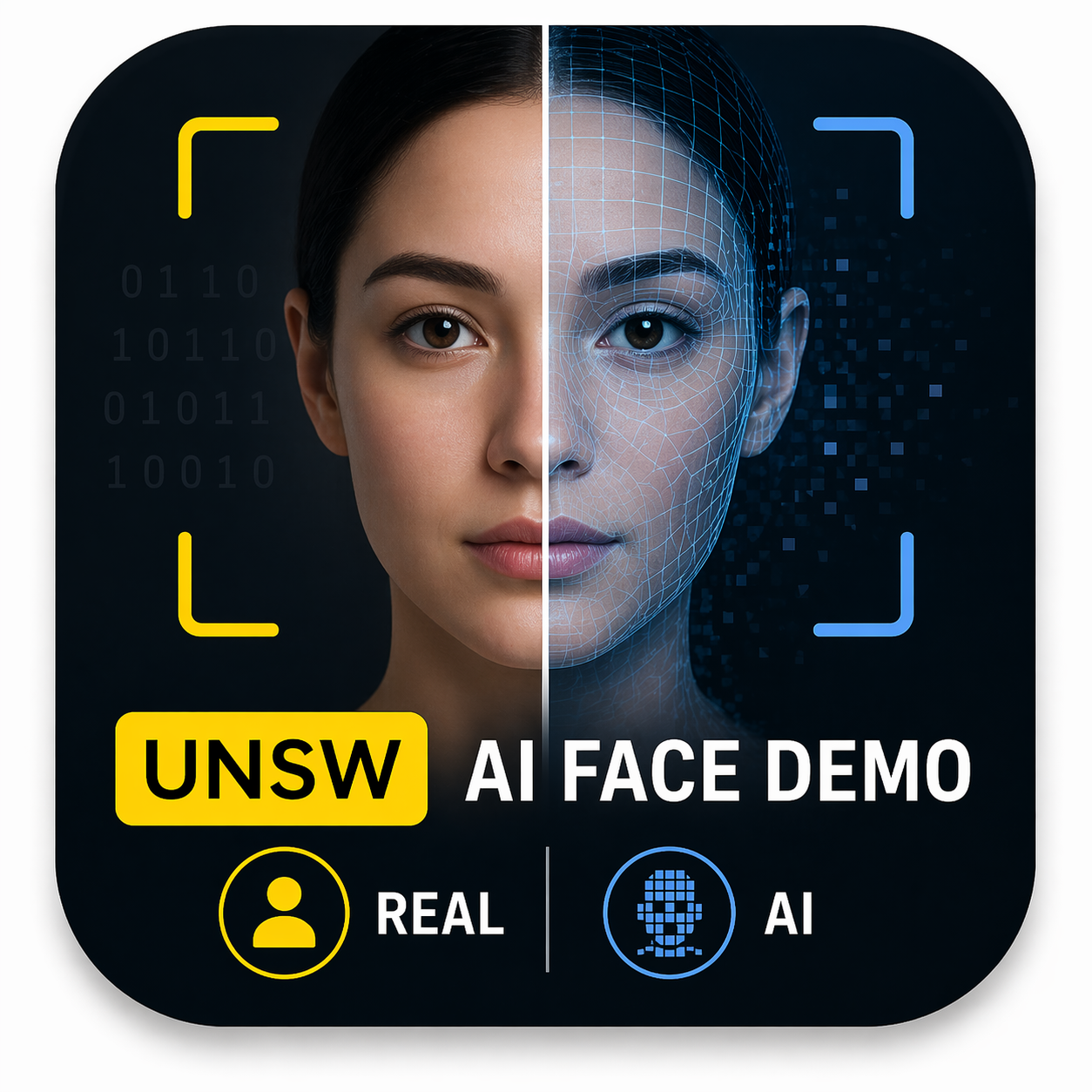
Can you tell a real face from an AI-generated one?
Most people can't. This demo test shows how well you can spot AI-generated faces from real ones — and reveals why getting it wrong has real consequences.
The test
Decide whether each face is real or AI-generated.
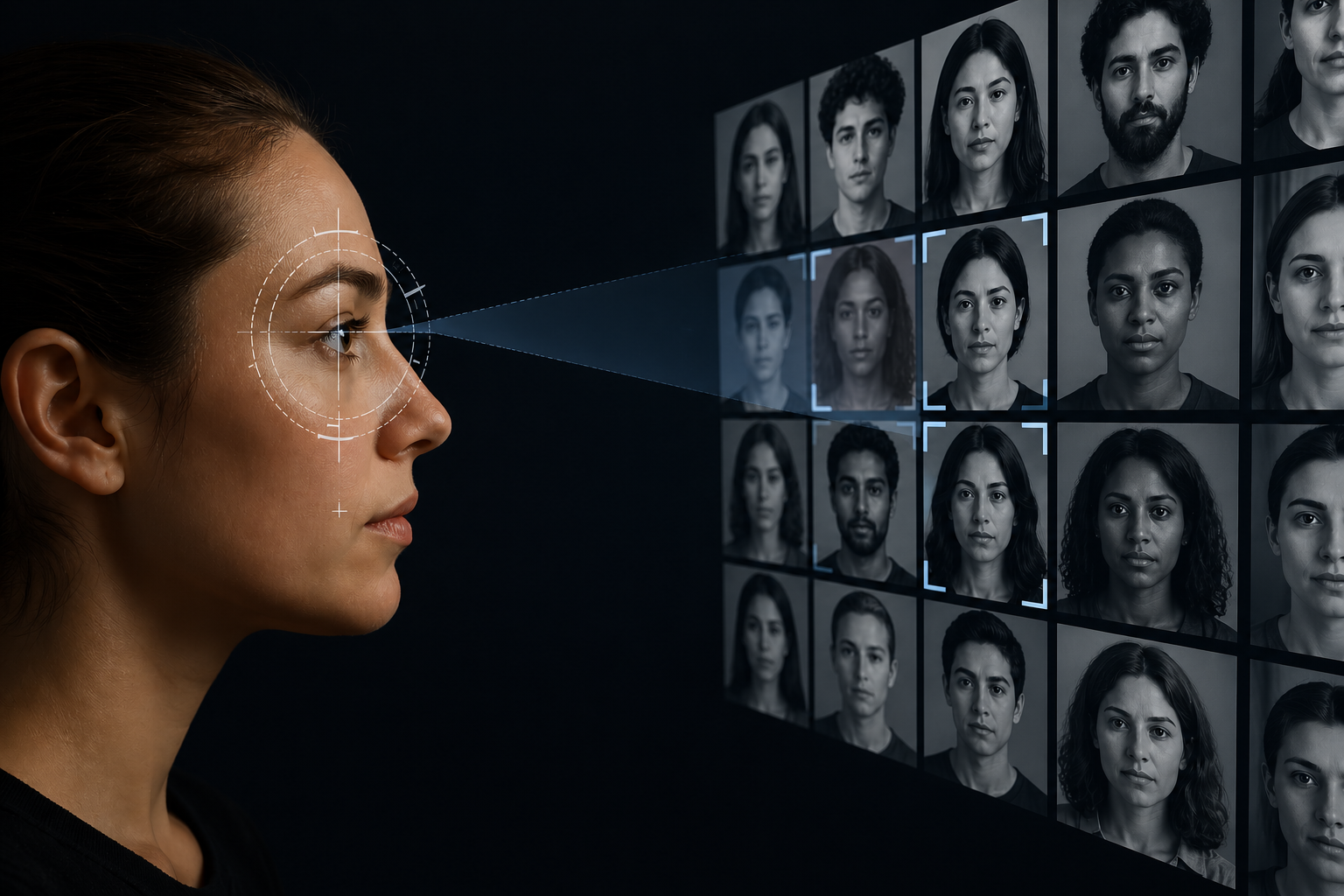
You will be shown a series of faces and asked to decide whether each one is a real photograph or generated by artificial intelligence.
The images are designed to be challenging. Many AI-generated faces now appear highly realistic, and obvious cues are often not enough to go on.
Your responses help researchers understand how people detect synthetic faces — and why some individuals are much better at it than others.
Why it matters
AI-generated faces are already being used to deceive.
AI-generated faces are not just an aesthetic curiosity. A synthetic profile photo can be paired with AI-written biographies, messages, and document-style layouts to create a fully convincing false identity — one that is easy to scale and hard to detect.
Deepfake technology can alter images and videos of real people, making them appear to say or do things they never did. Foreign actors have already used AI-generated identities to access organisations, spread propaganda, and support cyber operations.
Average accuracy when people try to tell AI faces from real ones — equivalent to random chance
The people who made the most errors were often the most confident.
Current automated deepfake detectors are failing against realistic AI-generated faces
Scalable identity fraud
Fraud losses could reach AUD >$1 billion annually by 2027 as synthetic identities are used to deceive banks, employers, and government verification systems.
Undermining identity verification
As governments, banks, and employers increasingly rely on digital identity checks, synthetic identities create new challenges for verification and trust.
Foreign interference and cyber operations
Foreign actors have used AI-generated identities to access organisations, spread propaganda, and support cyber operations — a direct and growing national security concern.
Individual differences
Some people are much better at spotting AI faces.
Super AI-detectors
Some individuals consistently outperform others when distinguishing real faces from AI-generated ones — picking up on subtle visual cues that most people miss.
Understanding what makes them better can inform training and the design of more effective detection systems.
Most people
On average, people perform close to guessing — yet they tend to be overconfident in their own ability to detect fakes.
This overconfidence is itself a risk: people and organisations may rely on human judgement for identity verification when that judgement is demonstrably unreliable.
What our research shows
Key findings from UNSW.
People struggle — and are overconfident
People cannot reliably distinguish AI-generated faces from real ones. Worse, they tend to be overconfident in their ability to do so — a combination that creates real risk in identity verification contexts.
AI faces appear more familiar and trustworthy
AI-generated faces tend to look more average, familiar, and trustworthy than photographs of real people — making them harder to identify and well-suited for impersonation and fraud.
Some people are significantly better detectors
There are large individual differences in detection ability. A small group of "super AI-detectors" consistently outperform others by picking up on subtle visual cues that most people miss.
Combining approaches outperforms either alone
Combining human judgement with AI detection systems outperforms either approach on its own — pointing toward hybrid human–AI systems as the most promising defence against synthetic identity fraud.
"The challenge is no longer whether an image is fake — it is whether we can trust the identity behind it."
About this research
The IDeA Lab, UNSW.
This research is conducted by the IDeA Lab (Identity, Detection & Appearance Lab) at UNSW Psychology. The lab studies human face recognition and its application to identity verification, security, and fraud prevention.
Key publication
Dunn, J. D., White, D., Sutherland, C. A. M., Miller, E. J., Steward, B. A., & Dawel, A. (2026).
Too good to be true: Synthetic AI faces are more average than real faces and super-recognizers know it.
British Journal of Psychology.
https://doi.org/10.1111/bjop.70063
Contact: Dr James Dunn, UNSW School of Psychology — j.d.dunn@unsw.edu.au
Try it yourself
See how well you can detect AI-generated faces.
The test is short, free, and designed to reveal how difficult this task has become — and to contribute to research that matters for digital security and identity verification.